
A pitch that plays well looks unremarkable, which is precisely the problem when it comes to funding its upkeep. Nobody notices even bounce, secure footing and consistent ball roll; everyone notices a bare goalmouth and standing water. Football pitch maintenance is a year-round agronomic programme rather than a mowing schedule, and the surfaces that hold up through a season are the ones where the unglamorous work happened months earlier.
Wear Is Concentrated, Not Uniform
Damage on a pitch does not distribute evenly. Goalmouths, penalty spots, centre circles and the areas in front of dugouts take a disproportionate share of the traffic, and they fail first. Recognising this changes the maintenance approach targeted repair, overseeding and rest for those zones delivers far more than treating the whole surface identically. Rotating pitch orientation where a facility has the space, or shifting training areas week to week, spreads wear that would otherwise concentrate in the same square metres all season.
Soil and Compaction Come First
Under heavy use, compaction is the dominant problem. Compacted soil sheds water rather than absorbing it, restricts rooting and produces the thin, hard-wearing patches that appear in the same places every year. Aeration relieves this and needs to happen several times a season on a well-used pitch rather than annually. Deeper decompaction addresses layers that surface tining cannot reach. Soil testing establishes nutrient status and pH, which frequently explains persistent weakness that fertiliser applied by habit has failed to fix. This diagnostic groundwork is what distinguishes real pitch care from a mowing contract with a pitch attached to it.
Drainage Determines Playability
A pitch that holds surface water is unplayable regardless of how good the grass is, and prolonged saturation damages both the sward and the soil structure. Assessment covers surface falls, the condition of any installed drainage, and whether the soil profile actually transmits water. Sand slitting, gravel banding or full drainage installation are significant investments and often the only durable answer where a pitch floods repeatedly. Repeated re-turfing of a wet area is money spent on a symptom.
Mowing to the Right Standard
Height affects both playing characteristics and turf health. Too short and the plant is stressed and roots shallow; too long and the ball behaves inconsistently. Frequency matters more than most volunteers realise, since removing more than a third of the leaf at a cut damages the plant. Sharp blades are essential torn leaf tips brown within days and give the surface a dull cast. Varying the mowing direction distributes machinery wear and improves the appearance of the sward.
Nutrition and Overseeding
Growth is continuous in this climate, which means nutrient demand is constant rather than seasonal, and a programme based on temperate scheduling will under-feed. Applications should follow soil test results and observed growth rather than a fixed calendar. Overseeding worn areas keeps the sward dense enough to resist weed invasion and recovers goalmouths between fixtures. Timing matters: seed needs a window with adequate moisture and reduced traffic to establish, which is why renovation is scheduled around the fixture list rather than whenever it is convenient. A proper turf management service plans these windows a season ahead rather than reacting once the goalmouths have gone.
Divot Repair and Between-Match Work
Small, consistent attention produces better surfaces than periodic major intervention. Replacing divots after each session, brushing the surface to lift the sward, and light rolling where appropriate all take limited time and compound. This is also where a facility’s own staff or volunteers can contribute meaningfully alongside a contractor’s programme, provided somebody has shown them what to do and when.
Line Marking and Presentation
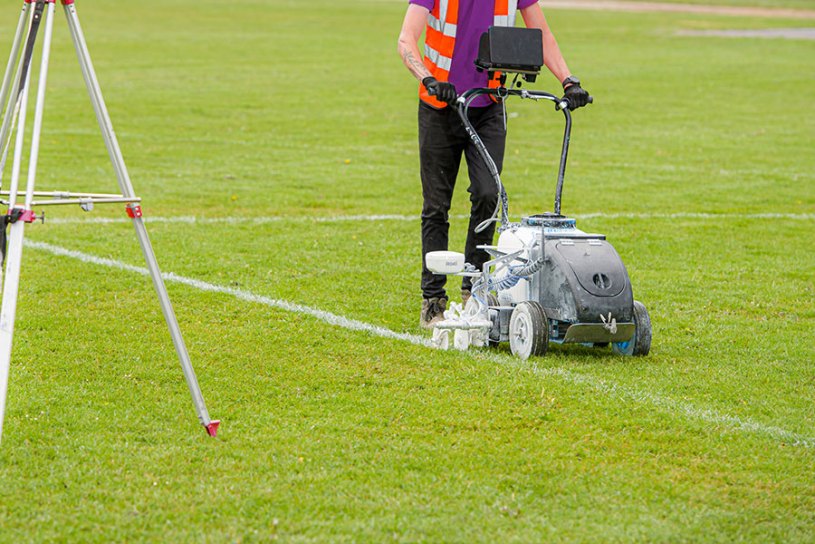
Marking is a maintenance activity rather than a cosmetic one. Repeated application of paint over the same lines builds up and can affect the turf beneath, so the practice matters. Accurate initial setting-out saves time all season. Presentation also affects how a facility is perceived by visiting teams and by whoever funds it, which has a practical bearing on the maintenance budget the following year.
Managing Shade and Surroundings
Perimeter trees affect a pitch more than expected. Shade produces thin turf along one touchline that no fertiliser programme will fix. Leaf and debris fall adds clearance work and smothers grass. Roots can encroach into the playing surface. Coordinating pitch work with tree pruning around the perimeter lets light levels and debris be managed deliberately instead of being treated as an unavoidable constraint.
Planning Around the Season
The programme should be built around the fixture calendar. Major renovation decompaction, scarification, heavy overseeding, topdressing needs a window with limited use, which usually means the off-season. In-season work concentrates on repair, targeted overseeding, nutrition and aeration between fixtures. A written annual plan with these windows agreed in advance prevents the common situation where renovation is deferred repeatedly until the surface has degraded past easy recovery. A competent contractor will build that calendar around your fixture list rather than applying a generic schedule.
What Good Looks Like
A match-ready pitch has even coverage with no bare zones, a firm surface that drains within a reasonable period after rain, consistent ball behaviour across the whole area, and secure footing. Achieving that reliably is a matter of soil condition, drainage and consistent programme delivery not of anything visible on the morning of a fixture.
 Globals Sport